We rarely see a praying mantis. This one stayed around the porch area for many days.
The European praying mantis (Mantis religiosa) was designated the official state insect of Connecticut in 1977. The praying mantis is a green or brown insect that eats aphids, flies, grasshoppers, caterpillars, and moths. Not native to North America, but found throughout the state of Connecticutt, the praying mantis is a beneficial insect for farmers and a symbol of the importance of the natural environment..
This video shows our 2 new fawns, Sugar and Dumpling, suckling on Cider. Since we believe that Dumpling is Apple's fawn (Apple was also in the yard at the time), we found it curious that Cider would allow Dumpling to suckle. Any comments from our followers would be appreciated.
The Ruby-throated Hummingbird beats its wings about 53 times a second.
Ruby-throated Hummingbirds prefer to feed on red or orange flowers. Like many birds, they have good color vision and can see into the ultraviolet spectrum, which humans can’t see.
Ruby-throated Hummingbirds normally place their nest on a branch of a deciduous or coniferous tree; however, these birds are accustomed to human habitation and have been known to nest on loops of chain, wire, and extension cords.
Ruby-throated Hummingbirds are eastern North America’s only breeding hummingbird. But in terms of area, this species occupies the largest breeding range of any North American hummingbird.
Male Ruby-throated Hummingbirds don’t stick around long. Pairs are together long enough for courtship and mating – just a matter of days to weeks. Then he’s off on his own, and may begin migration by early August.
The oldest known Ruby-throated Hummingbird was 9 years 1 month old.
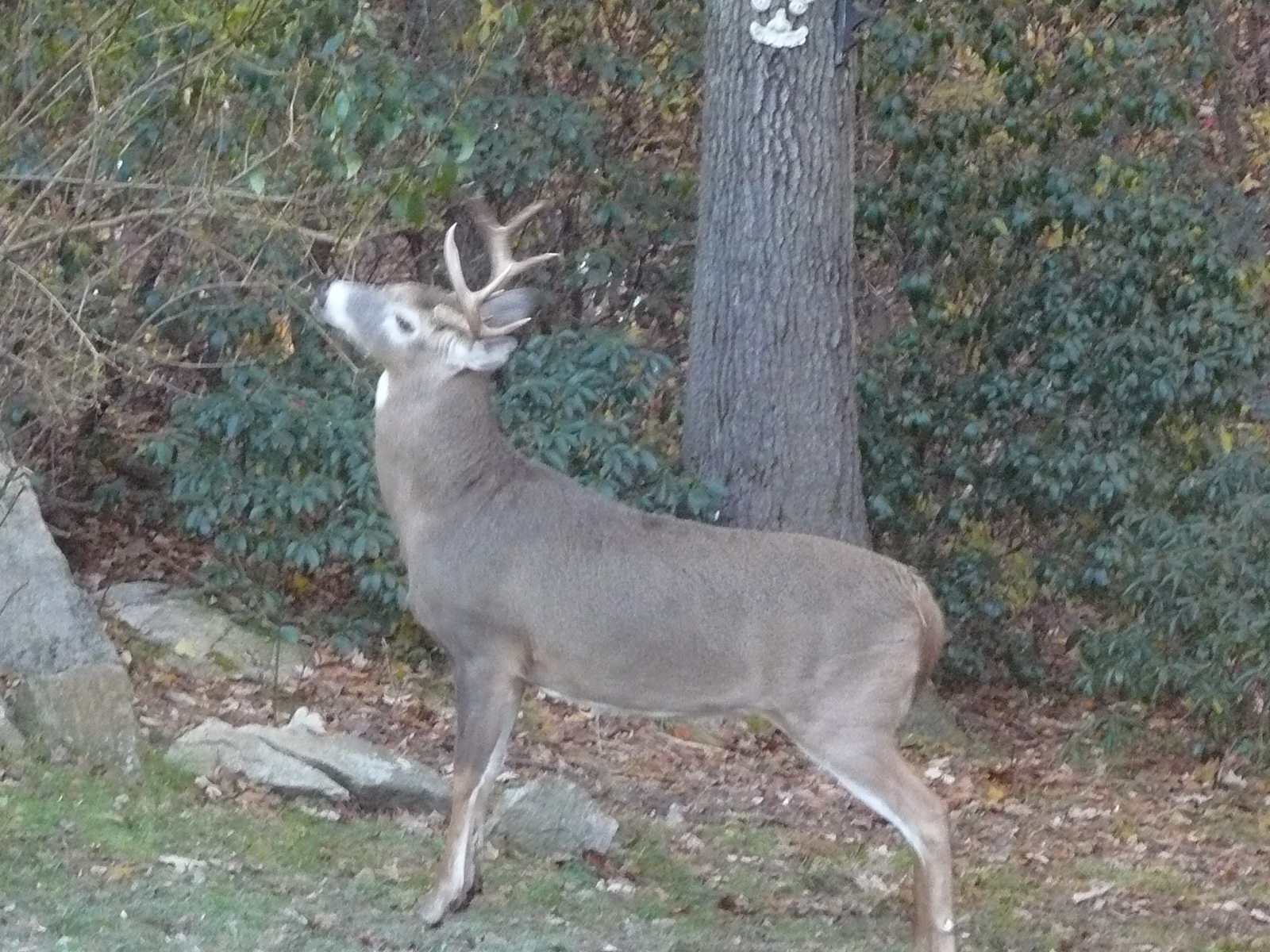
We own a wonderful piece of property which is adjacent to the Town of Shelton Open Space Trust Land consisting of several hundred acres with wonderful hiking trails. The wonders of nature abound here -- enjoy our photos.
We can be reached at Carlson2@yahoo.com or Jesse8080@gmail.com